
Duality of
Problem

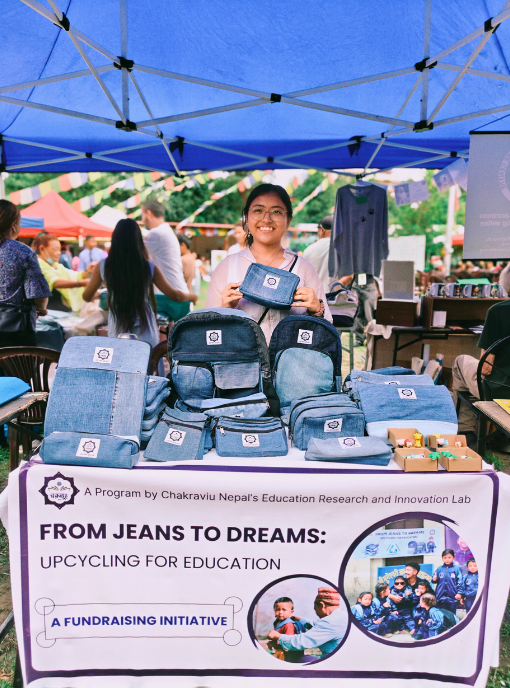
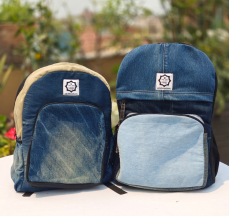
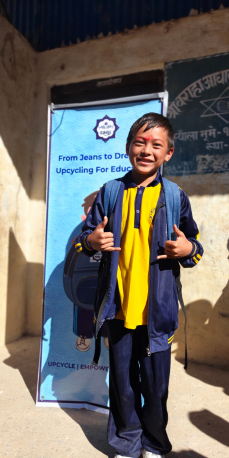
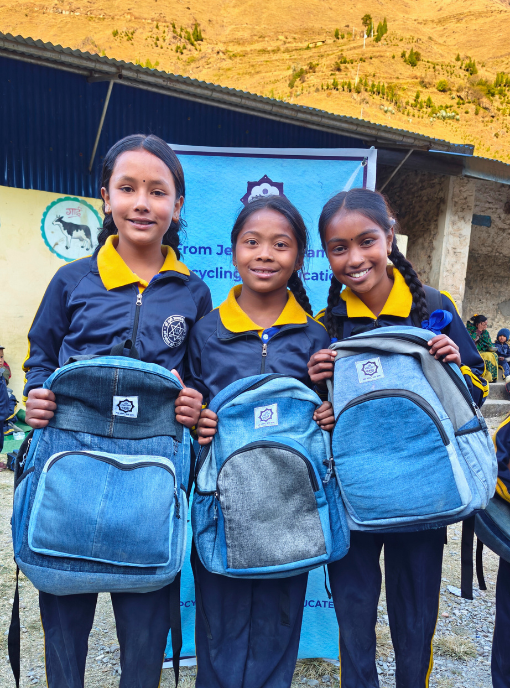
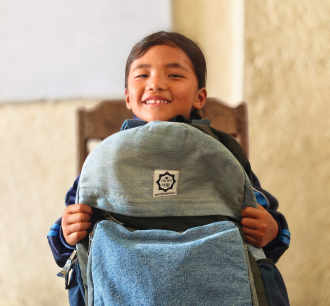
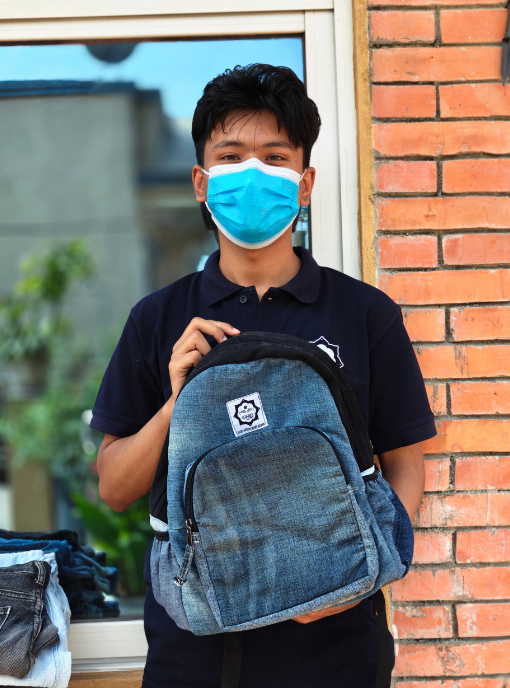
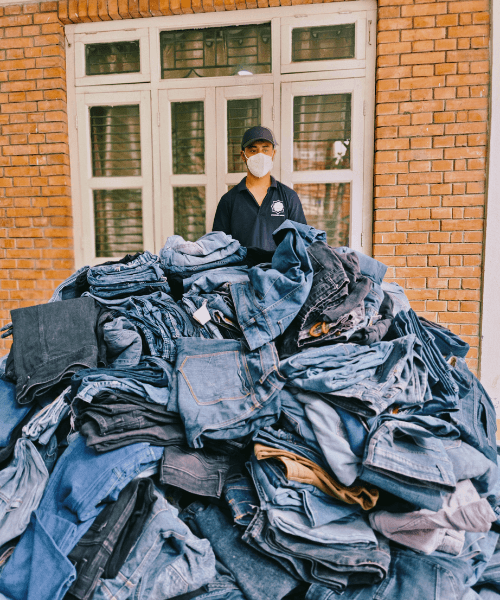
This is our flagship initiative that collects old jeans from urban communities and upcycles them into school kits for students in rural Nepal, increasing access to quality education, promoting sustainability, and empowering community. By combining waste reduction, livelihood generation, and improved educational access, the initiative advances environmental sustainability and promotes inclusive, equitable development.

TRI-FOLD IMPACT

EDUCATION: By upcycling old denim into school bags and stationery supplies, this project directly contributes to quality education for students in rural Nepal.The upcycled school kits are durable and sustainable.

ENVIRONMENT: Every pair of upcycled bag represents:

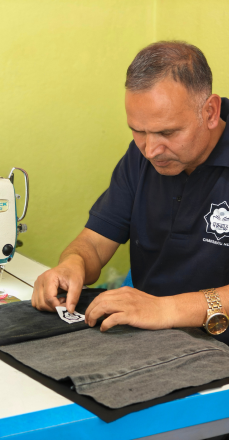
EMPOWERMENT: This project supports local employment, trains low-income individuals with upcycling training. Each step of the upcycling process is done locally in Nepal. Every product is locally made.

7,500 liters of water is used in making a single pair of jeans as per insights from UN

Levi's estimates that a pair of their jeans emits 33.4 kg of CO2 into the atmosphere, the equivalent of driving more than 1,000 kilometers in a car.

What school Bags ?

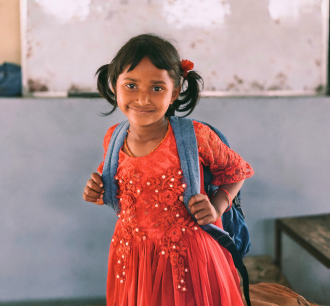
A school bag is a basic educational necessity that directly affects a child’s ability to participate in learning with confidence and consistency. It is an essential part of a child’s daily school life, quietly shaping how they arrive, learn, and return home each day.

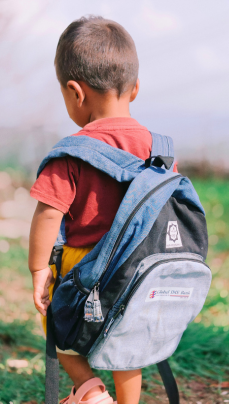
For many students in rural public schools, the walk to school is long and physically demanding, often along difficult roads and uneven paths. While we may not be able to shorten these distances or change the terrain they must cross, we hope that a strong, well-made school bag can make that journey a little more comfortable. Carrying books securely and evenly can ease the physical burden and allow children to begin their school day with greater ease.

A proper school bag also protects learning materials from rain, dust, and wear. When notebooks and stationery last longer and remain intact, children are less likely to miss lessons or fall behind. Over time, these small practical supports help build consistency and confidence in learning.

Within the context of the Upcycling Lab, a school bag also serves as a practical introduction to environmental responsibility. Made from reclaimed denim, these bags demonstrate how everyday materials can be reused thoughtfully and responsibly. Students learn that sustainability is not only a global issue but something that can be practiced in daily life.

A school bag also carries social value. It supports dignity, reduces visible inequality in the classroom, and reassures children that their education is valued. Through this essential item, the Upcycling Lab connects education, environmental awareness, and community care in a way that is tangible and meaningful for students.

Above all, a school bag represents care. It tells children that their education matters and that people beyond their classroom are thinking about their daily realities. In this way, something simple becomes deeply human, supporting not only learning, but dignity and belonging.

Our upcycled school kits are 100% handmade, 100% reclaimed, and 100% community-powered.

A Circular System

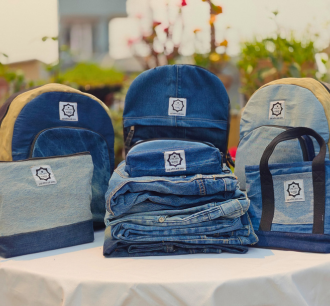
The Upcycling Lab applies a strict 100% material-utilization approach to every pair of donated jeans. Once the primary fabric panels are allocated for school bags and educational kits, the residual denim is systematically repurposed into secondary products such as tech pouches, tote bags, and utility pouches. These items are crafted by trained local artisans of Chakraviu Nepal, primarily women from rural communities, and introduced to the market as revenue-generating goods. Income from these sales contributes directly to sustaining the upcycling process, supporting artisan training, and expanding the distribution of school kits to children in need. By eliminating material waste and reinvesting proceeds into community and educational outcomes, this circular model reinforces environmental responsibility, strengthens local livelihoods, and creates a sustainable funding loop that strengthens the long-term viability of the initiative.

From discarded denim to a child's daily companion

How our upcycled school kits are made

Step - 01
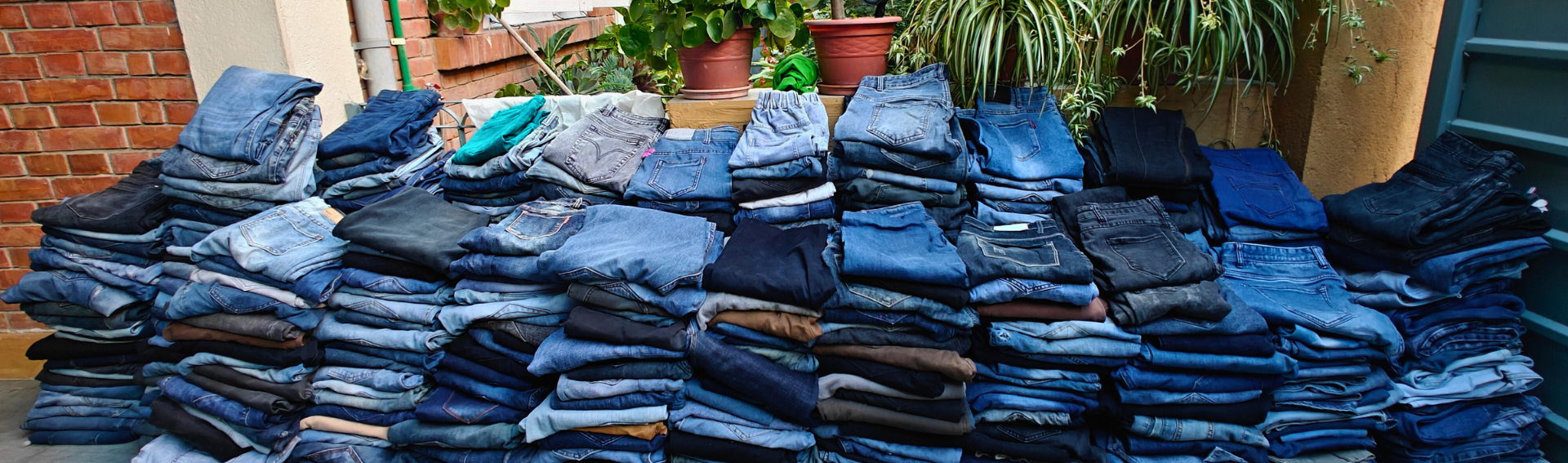
Denim Drive

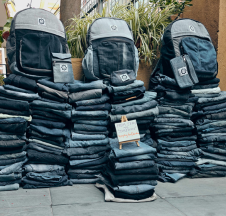
Collect post consumer use denim from urban community by conducting community denim drives, partnering with colleges and corporates

Step - 02
Sort Denim by Type

Collect and sort denim by size and material. Hard jeans make the best bags! Other types of denim are also useful

Step - 03
Clean, Dry, and Sanitize

All denim are washed thoroughly, sanitized, and prepped for the upcycling artisans

Step - 04
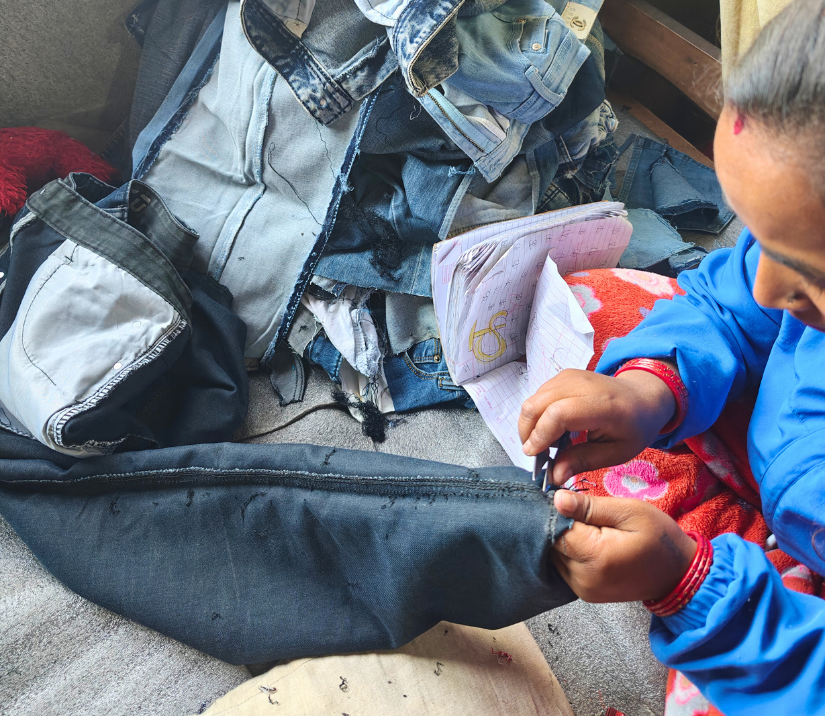
Unstitch

Stitching of denim are carefully removed so that a proper textile is ready to make the bags and pouches

Step - 04
Cut, Sew, Check

Our upcycling artisans sew the bags, add labels, check the quality and the bags and pouches are ready!

Our Impact So Far

+

pairs of jeans
collected

K+

upcycled school
kits distributed

K+

million litres
of embedded water
repurposed

+

tonnes of CO2E
avoided through
Upcycling

+

kg of textile
waste diverted
from landfills
Our Partners and Supporters

Schools we have supported with upcycled school kits

What Our Clients Say About
Our Volunteers

Michel Smith

Cloth Store Inc.

Charity is the voluntary act of giving help, typically in the form of money, time, or resources, to those in need. Charitable organizations aim to solve social, environmental, and economic challenges by addressing issues like poverty

Michel Smith

Cloth Store Inc.

Charity is the voluntary act of giving help, typically in the form of money, time, or resources, to those in need. Charitable organizations aim to solve social, environmental, and economic challenges by addressing issues like poverty

Michel Smith

Cloth Store Inc.

Charity is the voluntary act of giving help, typically in the form of money, time, or resources, to those in need. Charitable organizations aim to solve social, environmental, and economic challenges by addressing issues like poverty

Michel Smith

Cloth Store Inc.

Charity is the voluntary act of giving help, typically in the form of money, time, or resources, to those in need. Charitable organizations aim to solve social, environmental, and economic challenges by addressing issues like poverty