- Research
At Chakraviu Nepal, research is the backbone of our work. Our research focuses on practical, field-based inquiry that improves educational experiences, strengthens community systems, and advances environmental sustainability.
Our Research Approach
We adopt an applied and action-oriented research framework, grounded in real classrooms and lived community contexts. Our work combines:
- Classroom Action Research (CAR)
- Participatory and observational studies
- Qualitative feedback from students, teachers, and families
- Program-based documentation and outcome analysis
This approach allows us to continuously refine our models while remaining responsive to students’ needs and local realities.
Key Research Areas
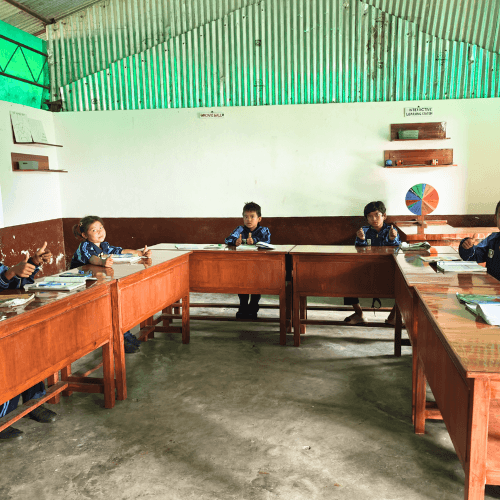
Holistically Empowered Classrooms (Build a Classroom)
We study how thoughtfully designed classroom environments influence student engagement, wellbeing, and learning behavior.
Our research within this project explores:
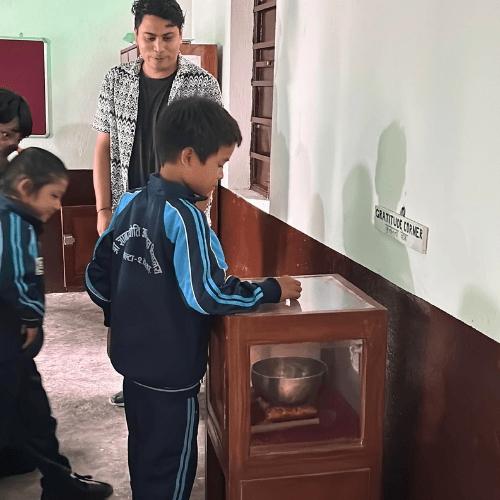
- How physical classroom elements (reading nooks, creativity spaces, gratitude corners, interactive learning stations) affect student participation
- The relationship between classroom design and social, emotional, and cognitive development
- Teacher and student interactions within flexible, non-traditional learning spaces
- Long-term impacts of environment-centered learning on curiosity and confidence
Classroom Action Research (CAR)
- Student engagement and participation patterns
- Social-emotional learning outcomes
- Effectiveness of experiential and activity-based pedagogy
- Adaptive teaching strategies for diverse learners
Education Access & Learning Resources
We study how access to appropriate learning materials and supportive environments influences educational outcomes, particularly in rural and resource-limited settings.
Research areas include:
- Barriers to access for students from low-income families
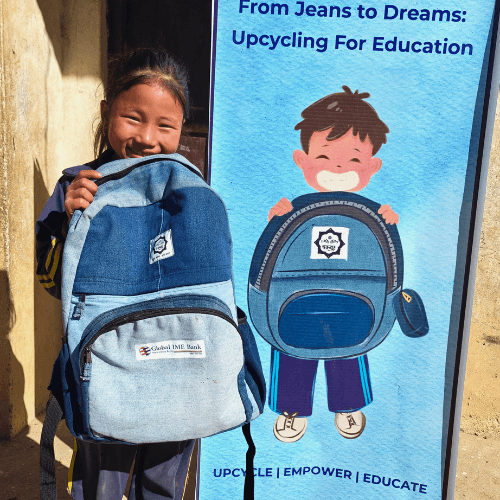
- Impact of upcycled and creative learning tools on motivation and retention
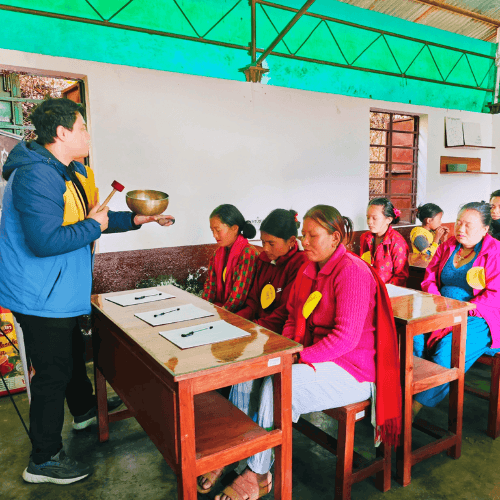
- Holistic learning sessions and their role in student wellbeing
Environmental Sustainability & Circular Innovation
Our work includes:
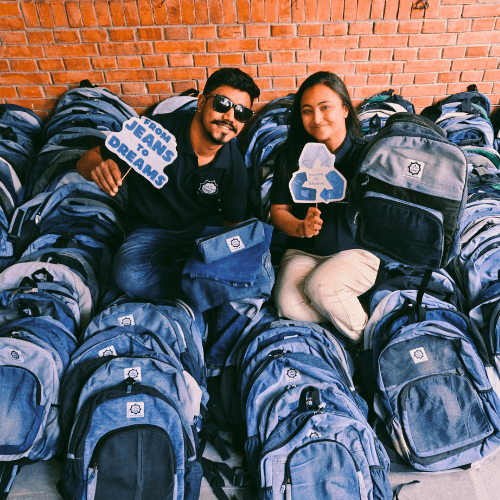
- Assessing denim waste streams and reuse potential
- Measuring environmental benefits such as waste diversion and resource conservation
- Studying the integration of environmental learning within education programs
Community Livelihoods & Skill Development
We examine how skill-based, education-linked livelihood models contribute to household resilience and long-term impact.
Our research explores:
- Income generation through upcycling skills
- Training effectiveness and skill retention
- The relationship between parental livelihoods and children’s educational continuity